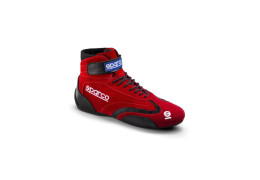
OMP Meccanica S3 SRC ESD shoes in black and red, size 42. Safety and style for motor enthusiasts.
Search in blog
Blog categories
Archived posts
Search in blog
Blog categories
Latest posts
OMP Meccanica S3 SRC ESD shoes in black and red, size 42. Safety and style for motor enthusiasts.
The Momo Race Evo Aluminum gear knob blends leather and aluminum for a unique style. Check availability.
AUTOSOL Shine Tube 75 ml: enhance your car's finish with impeccable shine.
The Occ Motorsport oil leak stopper helps keep your engine in top condition. Check the product details for more...
Refresh and protect exterior plastics with high adhesion. Ideal for cars.
Popular posts
Archived posts
Karting boots are not a whim or a "professional driver" piece with nothing more; they are a tool that directly affects your sensitivity with the pedals, your stability in the curves and your comfort after several sessions. And that is precisely where the difference begins between driving "correctly" and driving with precision.
In this guide we are going to see, with a practical and realistic approach, what makes a karting boot really good, what features really matter, what types of soles work best for different driving styles and when it is worth investing in FIA-approved boots. All explained in the clear and useful style of the CKC Autosport blog, aimed at those who enjoy karting and want to improve with judgment.
Before we start comparing materials, soles or closure systems, it is important that you know what you will get out of this article. We have organized the content so that you can apply it directly to your driving:
You will understand how footwear influences your way of braking, accelerating and feeling the kart, even if you have been practicing for a short time.
You will see what differentiates specific boots from a sports shoe, and why most drivers who try boots never look back.
We will explain what FIA approval provides for those who compete or train in regulated sessions.
We will talk about soles, reinforcements, ventilation, ankle supports and other elements that at first glance seem like details, but on track you notice them.
You will find practical steps to choose your boots according to your style, your level and the type of circuit you race on.
We include real recommendations, common situations and mistakes that almost all of us make when starting.
In the end you will be clear about which model suits you, which features you should prioritize, and how to avoid buying something that doesn't fit you.
If you want to dig deeper afterward, you can explore the Karting Boots section of CKC Autosport, where you'll find models from Sparco, OMP, MOMO and other specialized brands.
One of the main reasons karting boots are used is the sole. It's not a street sole or sports shoe sole: it's designed to let you feel every variation of the pedal. This is especially noticeable in:
Progressive braking, where you need to control pressure to the millimeter.
Acceleration on corner exit, where any abruptness translates to lost time.
Quick switches between pedals, very common in indoor karting.
Most drivers agree on one thing: when they switch from normal shoes to specific boots, the first impression is that "the pedal responds differently". And it's not magic: it's design.
Flexible sole: maximum sensitivity. Ideal if you like to feel every millimeter of the pedal's travel.
Semi-rigid sole: balance between control and support. Perfect for those who train often or compete at amateur level.
Rigid sole: more stability, less fine sensitivity. Suitable for aggressive styles or stints on tracks with lots of vibration.
Choosing the right type depends more on your personal style than your level.
The ankle suffers in karting, especially during fast turns, hard braking, or sudden direction changes. A good boot not only protects: it gives you stability without limiting mobility.
Karting boots typically have:
Lateral reinforcements
Padded zones
Combined closures (laces and velcro)
Materials that don't give with use
This type of support makes the difference between finishing the day with a sense of control or with a tired and less precise ankle.
On track you sweat, and a lot. That's why most quality boots include:
Breathable fabrics to reduce moisture
Reinforced panels at toe and heel
Lightweight materials that allow natural movements
Internal surfaces that prevent foot slipping
During long sessions, the difference between a ventilated boot and a closed one is noticeable from the first lap.
For many, the FIA seems distant until they start participating in events with technical inspection or organized competitions. FIA homologated boots meet higher resistance and safety standards. You don't always need them, but once you start competing they are practically mandatory.
Fire-resistant materials
Greater wear resistance
Safety testing under extreme conditions
Certified durability
It is important to remember that homologation expires, so if you are going to compete, check the label every season.
If you are a smooth, technical driver looking for absolute precision, you will be interested in boots with flexible soles.
If you tend to press hard on the pedal or race on tracks with vibrations, you might prefer a stiffer sole for cushioning.
If you do a bit of everything, the semi-rigid sole is the most versatile.
Outdoor: you need to dissipate heat.
Indoor: you need to prevent moisture and ensure grip.
In both cases, a technical boot works better than any ordinary shoe.
Smooth and technical → flexible soles
Intermediate → semi-rigid soles
Aggressive or competitive → rigid sole + ankle support
Hot tracks → ventilation
Indoor → grip and materials that manage humidity well
Boots work better when all your gear is aligned: gloves, suit, helmet… If you're looking for complementary equipment, the Karting Gloves section of CKC Autosport is a good place to start.
Do not wash them under water jets or use abrasive products.
Clean them with a damp cloth.
Let them breathe after each use.
Avoid leaving them exposed to the sun for hours.
Store the boots without deforming their structure.
With basic maintenance, a good boot lasts many seasons.
Yes. They help you control the pedal better from day one.
Only if you compete in events with official regulations. For training, not always.
Sparco, OMP, MOMO and Alpinestars are safe bets in terms of quality and durability.
You can, but they are not designed for that; their sensitivity is too high for daily use.
Going fast in karting is not just a matter of engine or technique: your equipment influences every detail, and boots are an essential part of that performance. Choosing the right footwear gives you more control, more stability and, above all, more confidence when attacking corners or managing braking.
If you are looking for quality boots, with options for all levels and styles, you can see the entire collection at CKC Autosport, where you will find technical and approved models for those who take driving seriously.
Related posts
check_circle
check_circle
Leave a comment